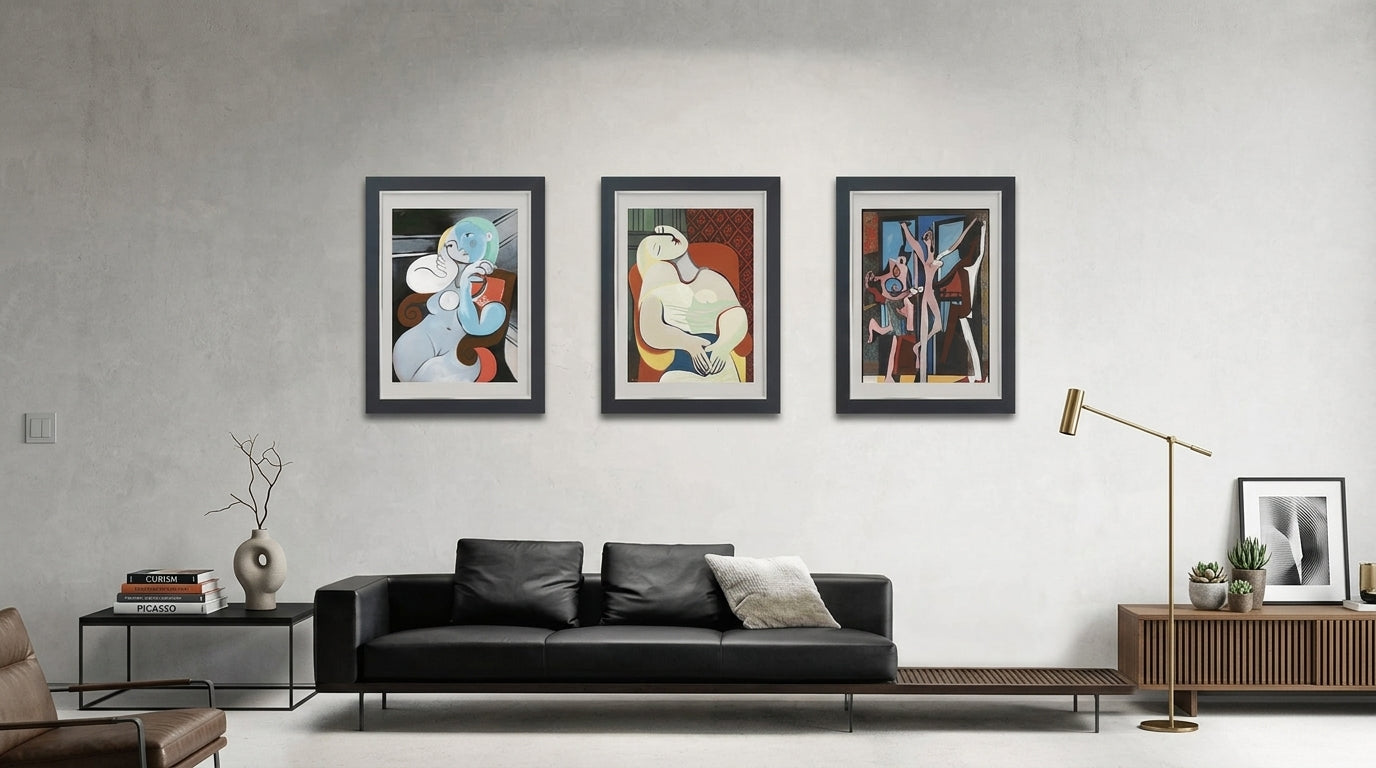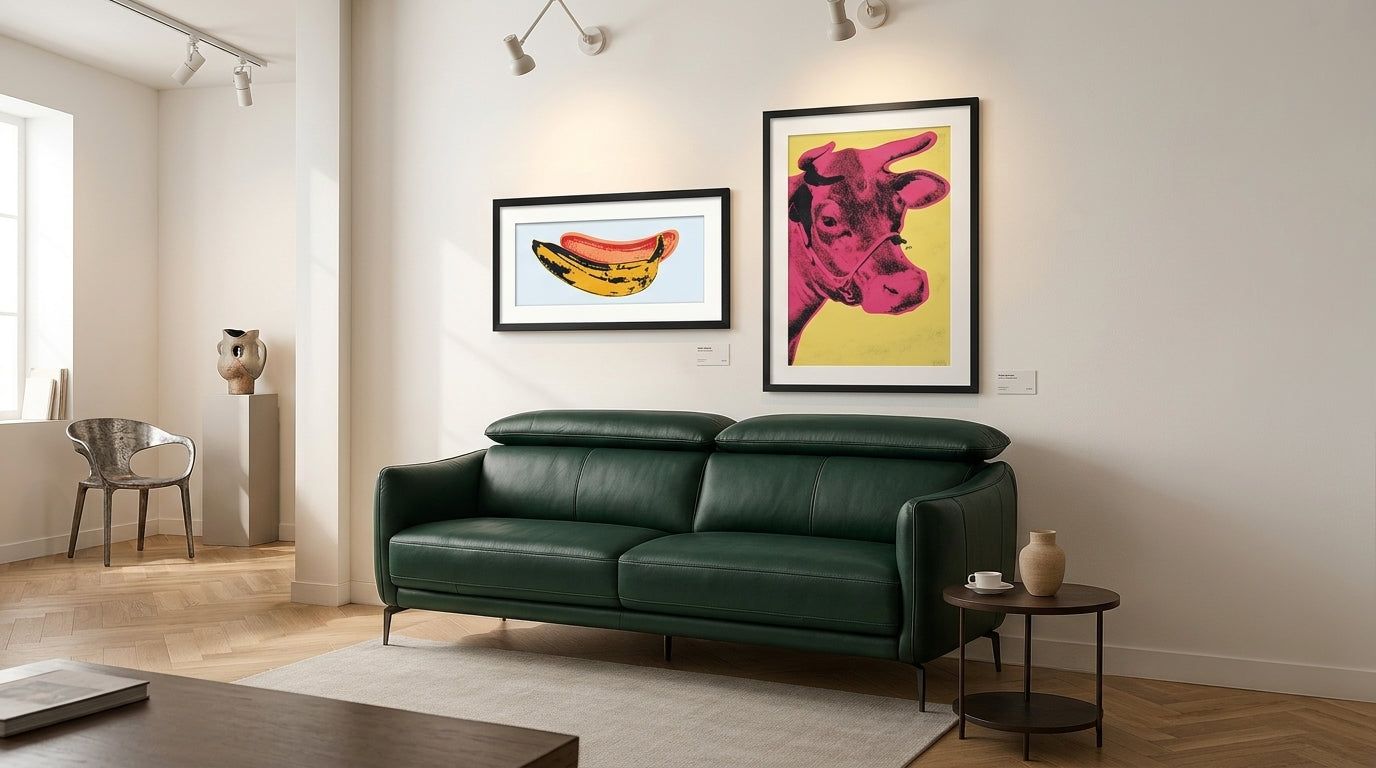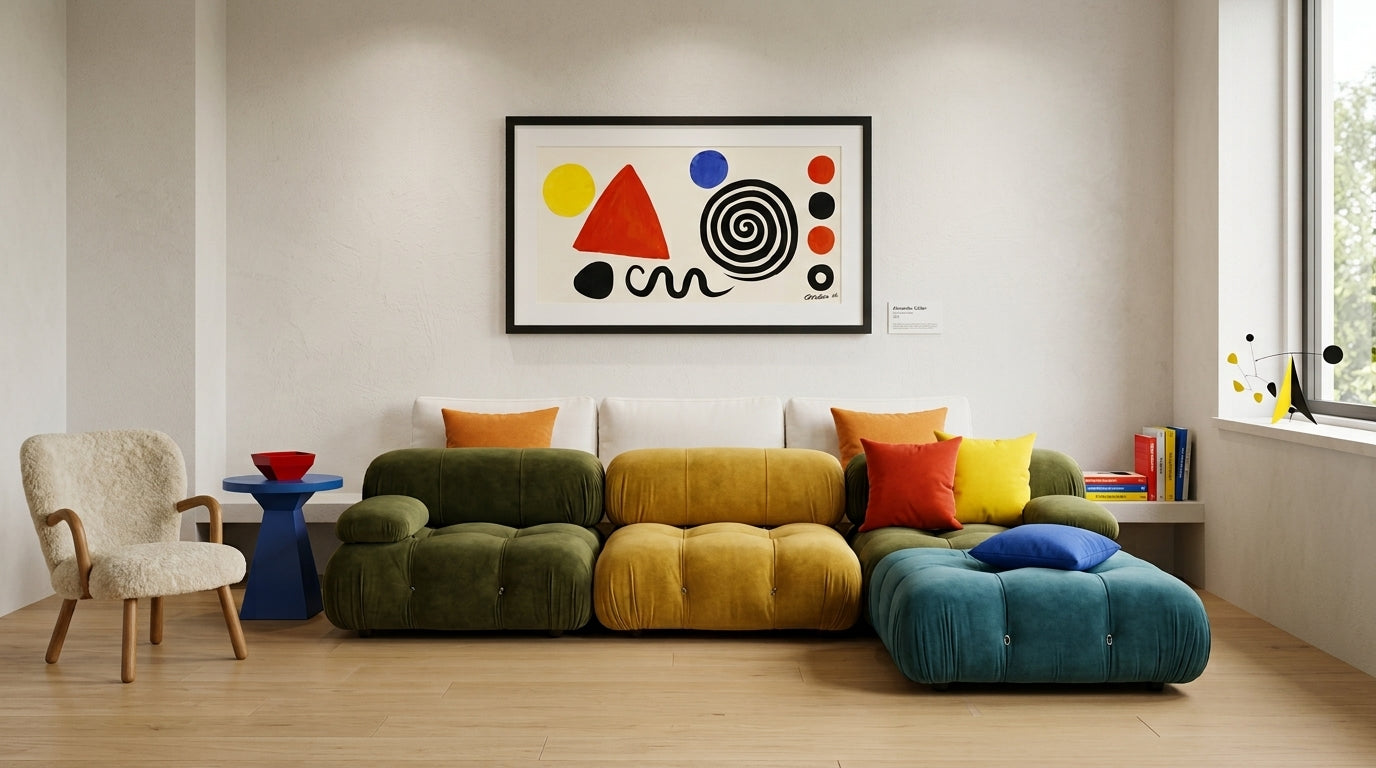

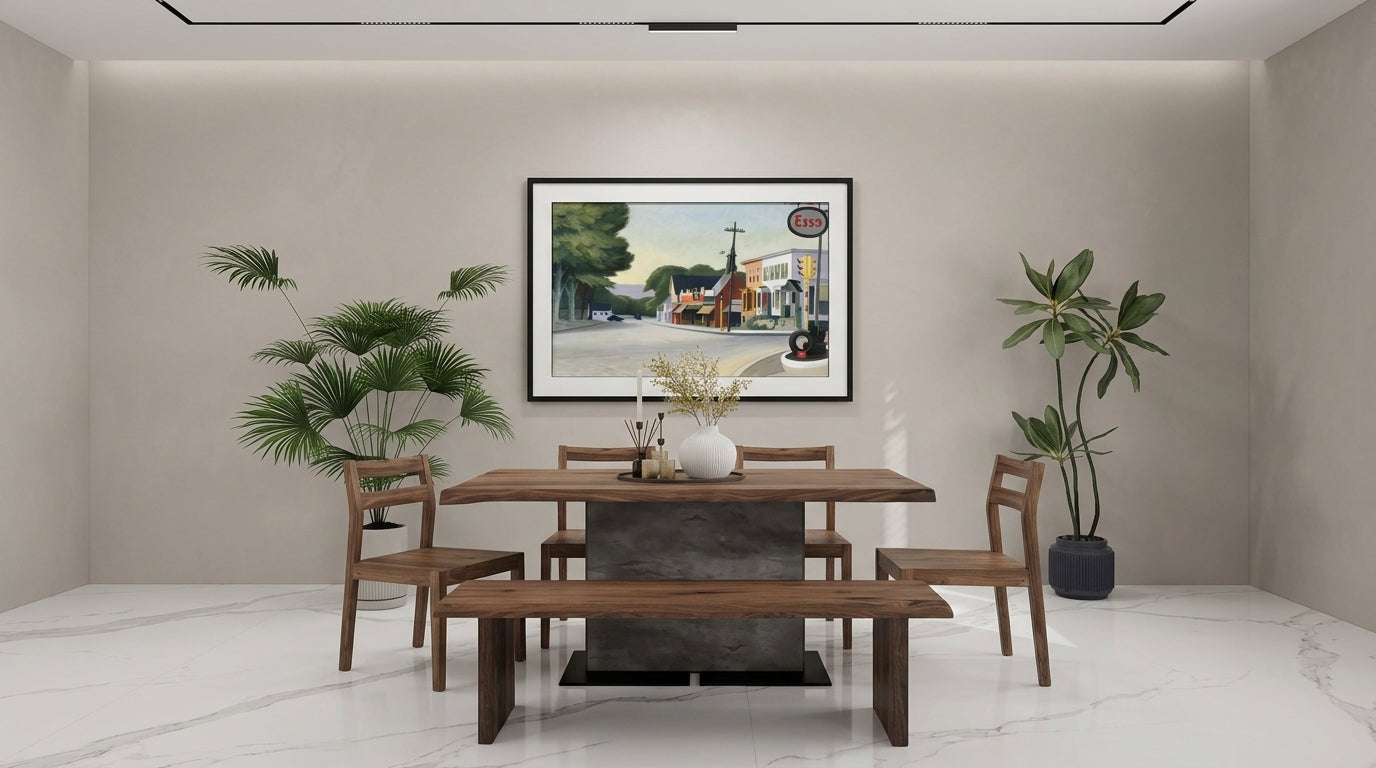

The dining room is one of the best places to display art.
Unlike the television wall, which contains screens, consoles and equipment, the dining area often has a clearer visual surface. Artwork can give that space a stronger identity and make daily meals, celebrations and conversations feel more considered.

Start with the Dining Table
The artwork should complement the scale and character of the dining furniture.
A long rectangular table can support:
- one horizontal artwork;
- a pair of vertically framed works;
- a triptych; or
- a controlled gallery arrangement.
A round table often works well with one centred artwork or a composition that introduces curved and organic forms.
Consider the visual weight of the table. A substantial walnut table can support stronger colour and larger artwork. A slim, pale wood table may suit lighter compositions or more delicate linework.
Create a View from the Living Room
In many Singapore homes, the dining and living areas share one open space.
The dining artwork may therefore be visible from the sofa, entrance or kitchen. It should relate to the wider interior rather than appear as an isolated decorative choice.
You can establish continuity by repeating:
- one colour from the living-room artwork;
- a similar frame finish;
- related artistic styles; or
- a shared level of visual intensity.
The artworks do not need to form a matching set. They should feel like they belong to the same home.
Consider the Mood of Dining
Dining rooms naturally support art that encourages warmth, conversation and visual interest.
Suitable directions include:
- expressive botanical subjects;
- landscapes;
- colourful abstraction;
- graphic modern works;
- still life;
- architectural subjects; and
- atmospheric photography.
Artwork with fine detail can be especially effective because guests have time to observe it while seated.
Avoid Artwork That Feels Too Small
A small picture centred on a wide dining-room wall may make the entire area feel unfinished.
Think about the relationship between:
- the artwork width;
- the table length;
- the wall dimensions;
- the pendant light; and
- any nearby cabinets or display units.
Where a large artwork is unavailable, combine several smaller framed works into one deliberate composition.
Coordinate with Lighting
A dining pendant and artwork may compete if both are visually complex.
When the light fitting is sculptural, choose artwork with a quieter composition. When the lighting is simple, the artwork can become the main visual statement.
Use controlled picture lighting or directional ceiling lights where possible. Avoid harsh reflections on framed surfaces.
Connect Art with Storage Furniture
A sideboard, display cabinet or custom storage unit can strengthen the artwork presentation.
Positioning art above a sideboard creates a layered composition and provides space for a small number of objects, such as ceramics, books or a table lamp.
Keep the accessories restrained. The artwork should remain the leading element.
Design the Dining Room as a Complete Setting
Discover licensed art, American hardwood tables, dining chairs and custom cabinetry for a dining room that feels collected rather than simply furnished.