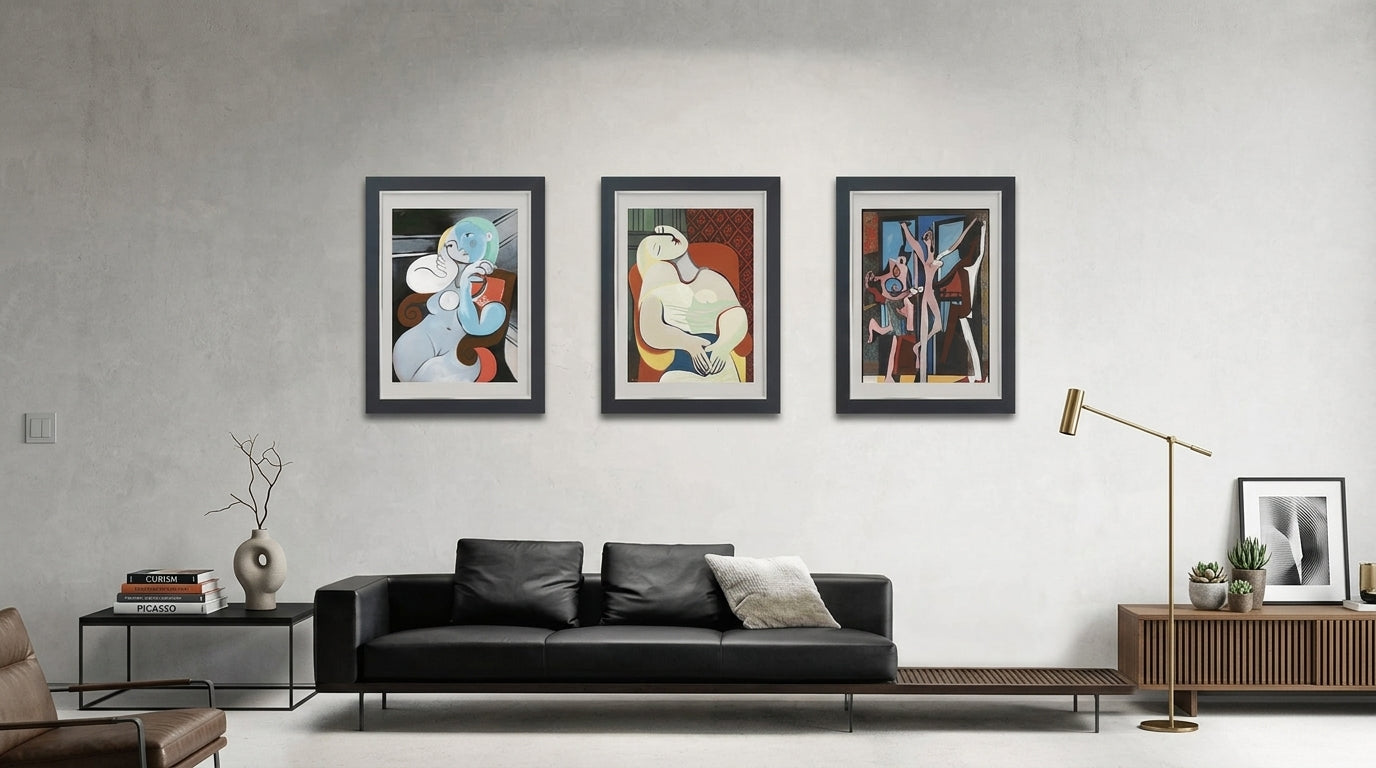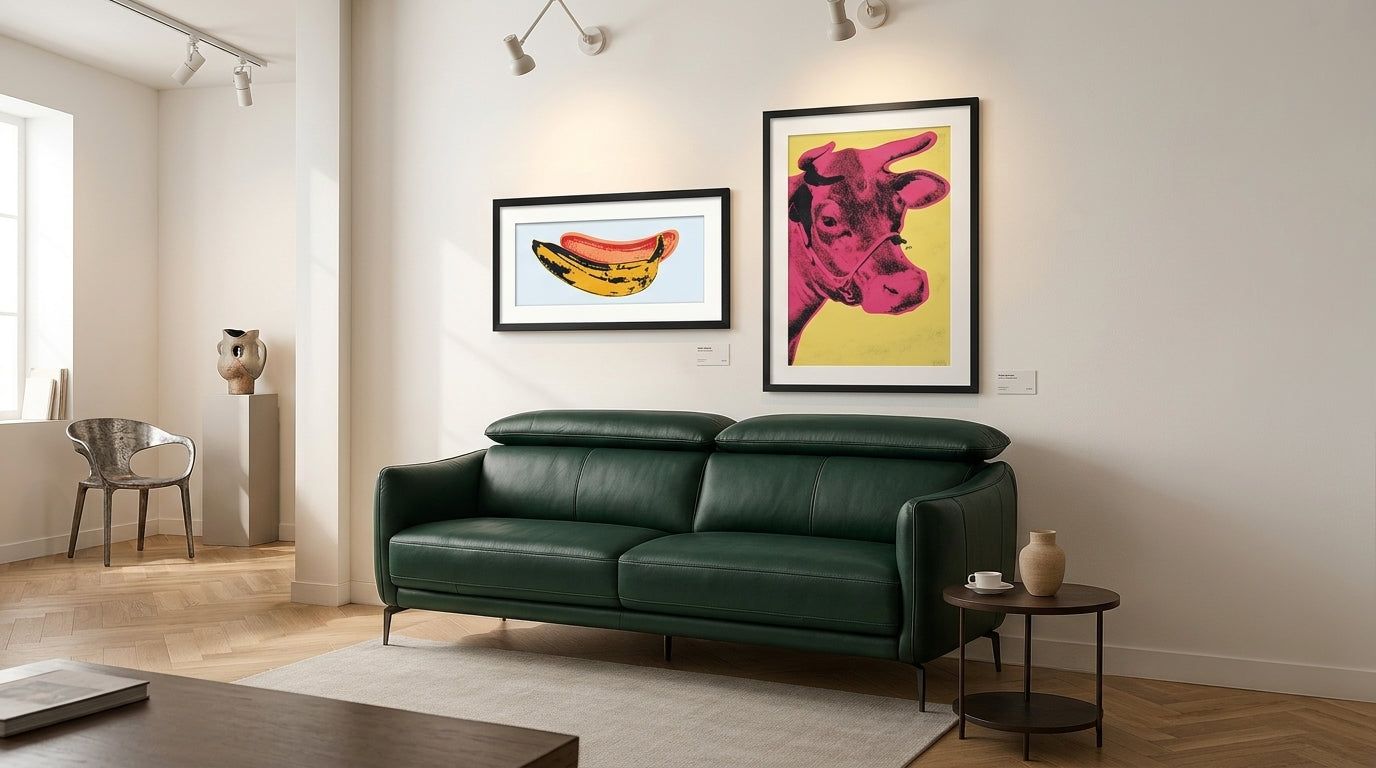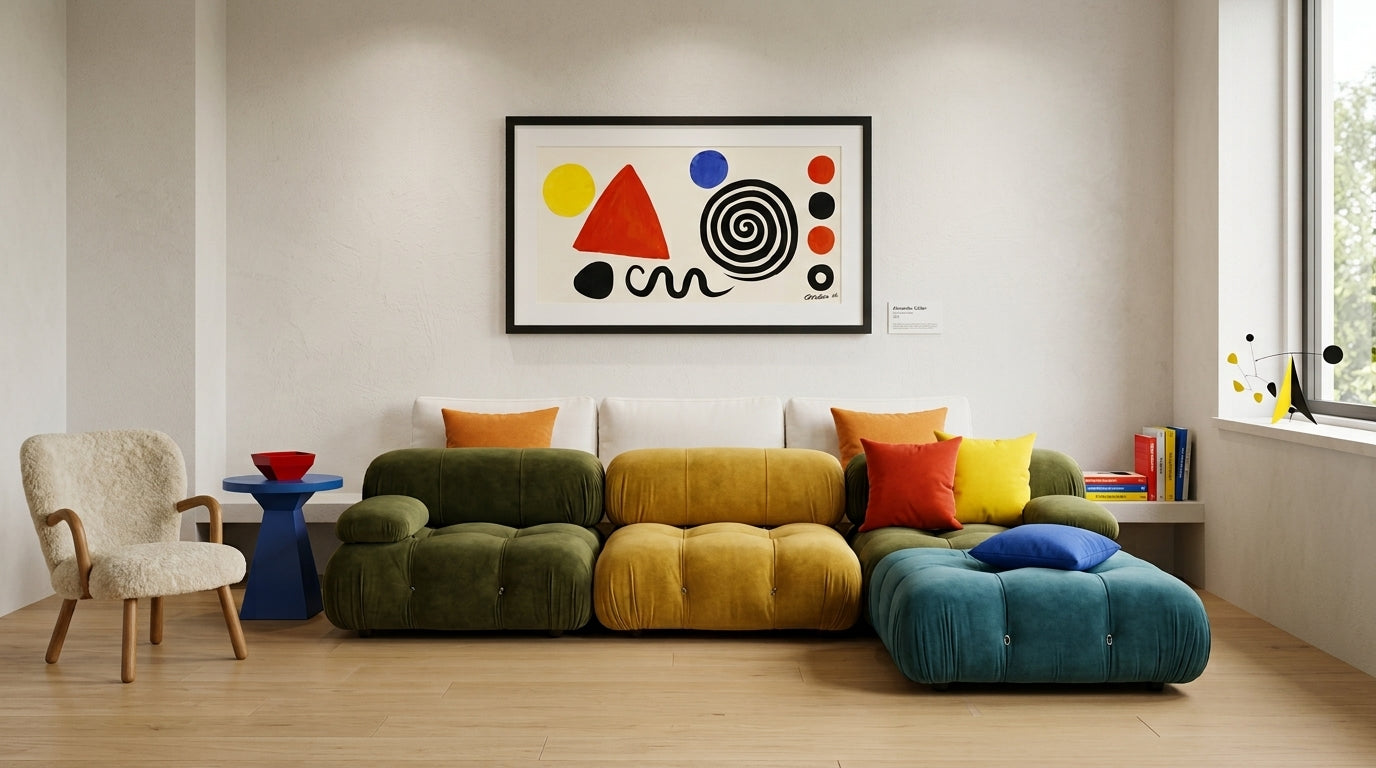

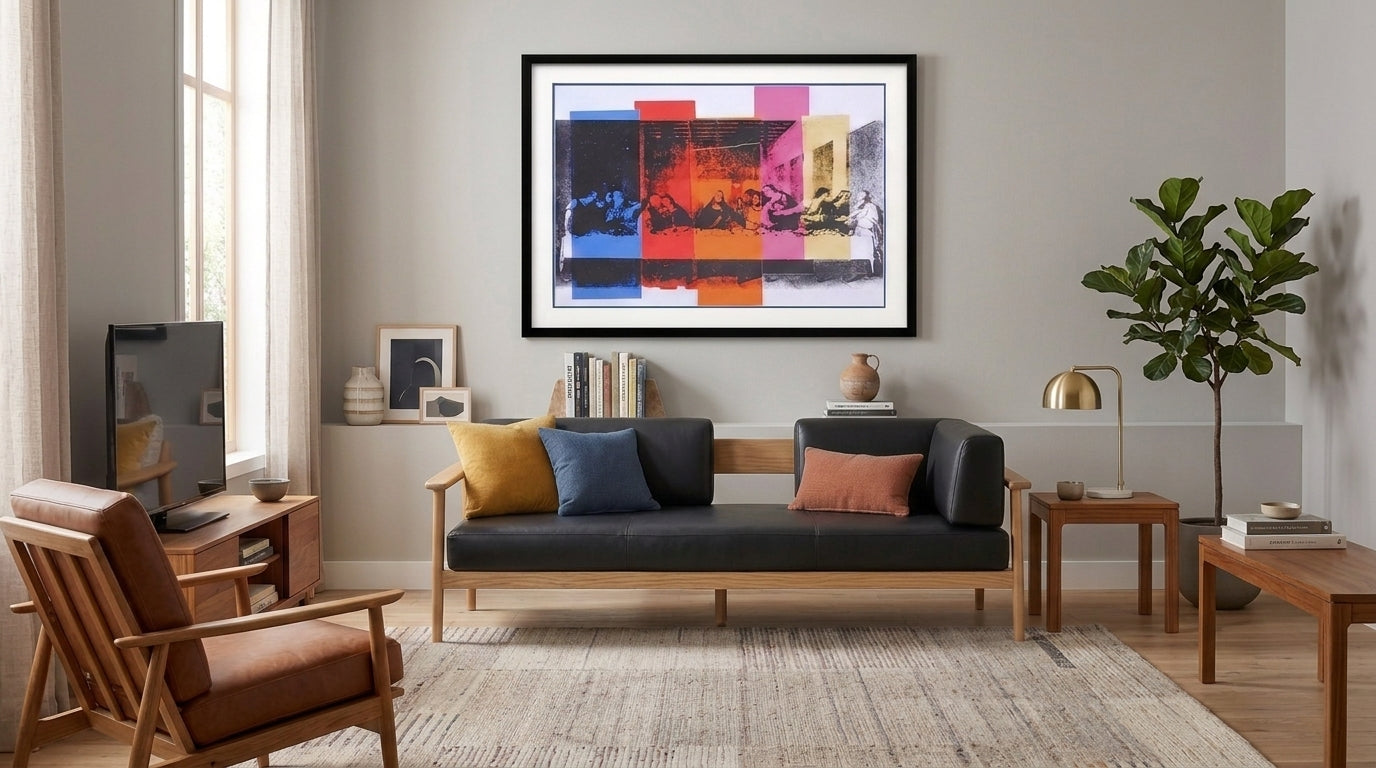

Furniture gives a room its function, but art gives it a point of view.
A sofa creates a place to rest. A dining table creates a place to gather. Cabinets bring organisation to the home. Art adds the emotional layer that turns these individual objects into a considered interior.
This is why choosing art should not be treated as the final task of filling an empty wall. It should be part of the way a room is designed, balanced and experienced.

![]() Art Establishes the Mood of a Room
Art Establishes the Mood of a Room
Before someone notices the construction of a sofa or the grain of a dining table, they often respond to the overall atmosphere of the room.
A soft landscape can make an interior feel calm and reflective. A graphic abstract work can create energy and movement. A colourful Pop Art image can make a restrained room feel more confident and playful.
The artwork does not need to match every colour in the furniture. Its role is to give the room an emotional direction.
Art Connects Different Pieces of Furniture
A home may contain furniture purchased at different times, made from different materials or designed for different purposes.
Artwork can create a visual relationship between these pieces.
For example, a painting containing warm ochre, muted green and dark blue could connect:
- a walnut dining table;
- an olive upholstered chair;
- a navy sofa; and
- warm-toned cabinetry.
The relationship does not need to be exact. Repeating one or two colours, shapes or textures is often enough to make the room feel intentional.
Art Creates a Focal Point
Every well-planned room benefits from a visual centre.
In the living room, this may be the wall above the sofa. In a dining room, it may be the artwork visible when entering the space. In a bedroom, it may be the wall behind the headboard.
Without a focal point, several pieces of furniture may compete for attention. A well-positioned artwork helps establish a clear hierarchy and gives the eye somewhere to rest.
Art Makes a Home Personal
Furniture may reflect how you live, but art often communicates what you are drawn to.
The artwork you choose may remind you of a place, create a sense of calm or simply bring you pleasure every time you walk into the room. It does not need to impress everyone. It needs to feel meaningful within your home.
That personal connection is what separates a furnished property from a home that feels collected over time.
Begin with the Room, Not the Wall
When choosing art, consider the complete setting:
- What furniture will sit beneath it?
- What colours and materials are already present?
- From where will the artwork normally be viewed?
- Should it calm the room or energise it?
- Is it intended to blend in or become the main statement?
At Picket&Rail, we view art and furniture as parts of the same interior conversation. The aim is not merely to place something on the wall, but to create a setting in which the artwork and furniture strengthen one another.