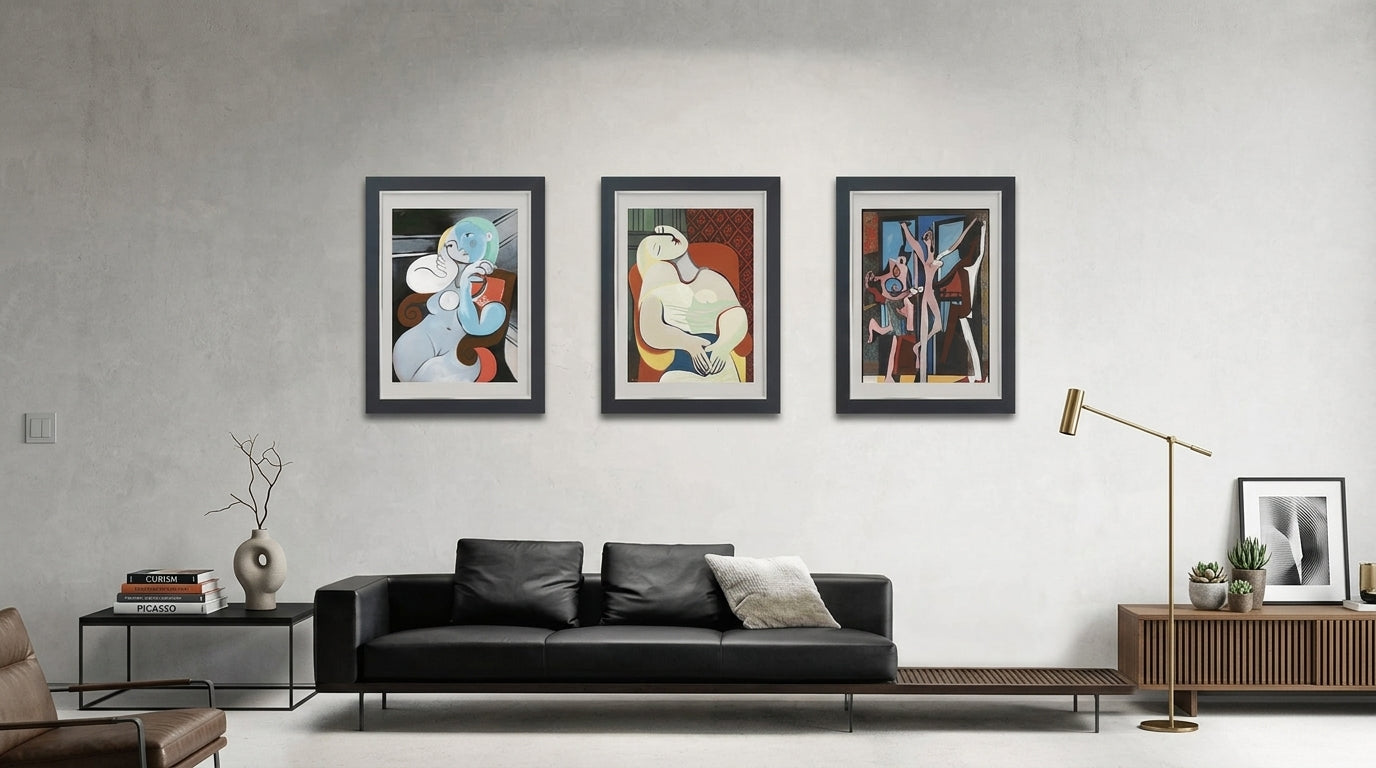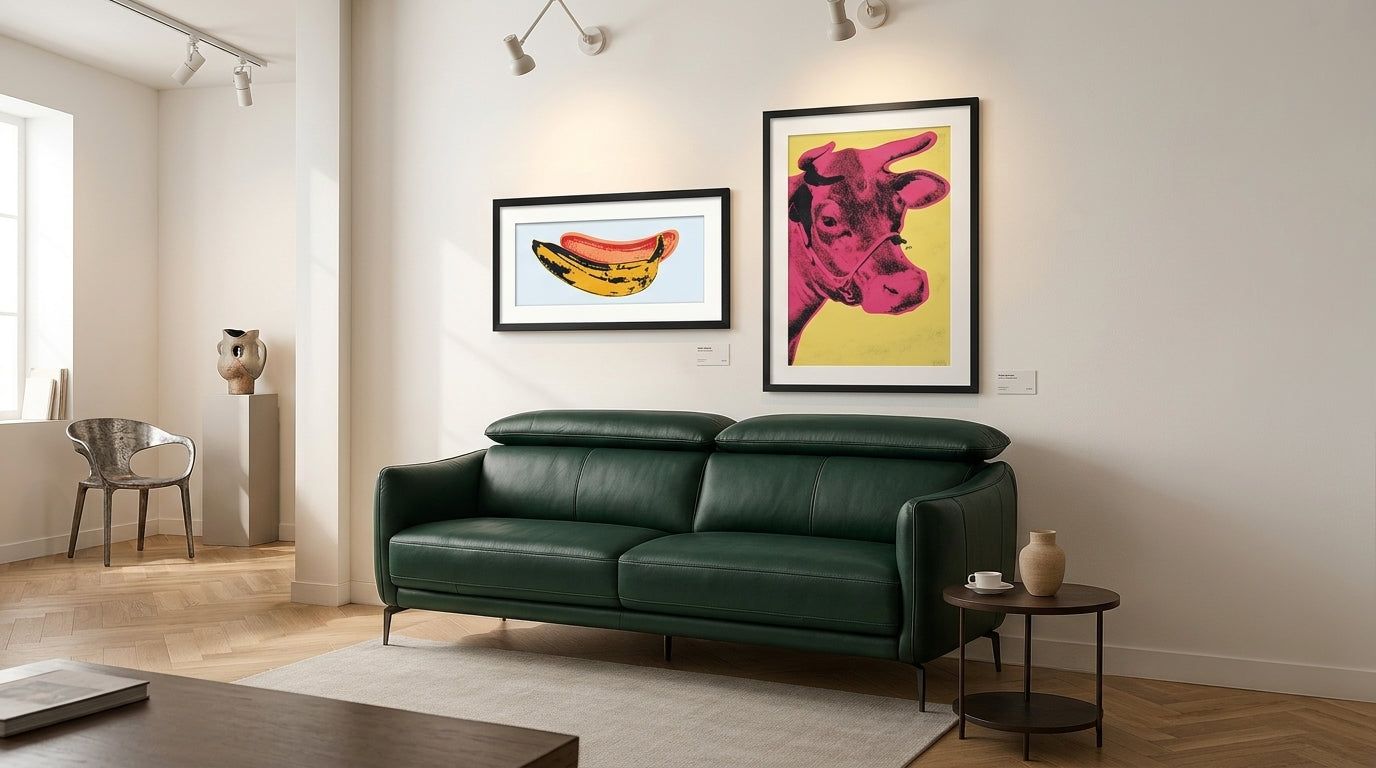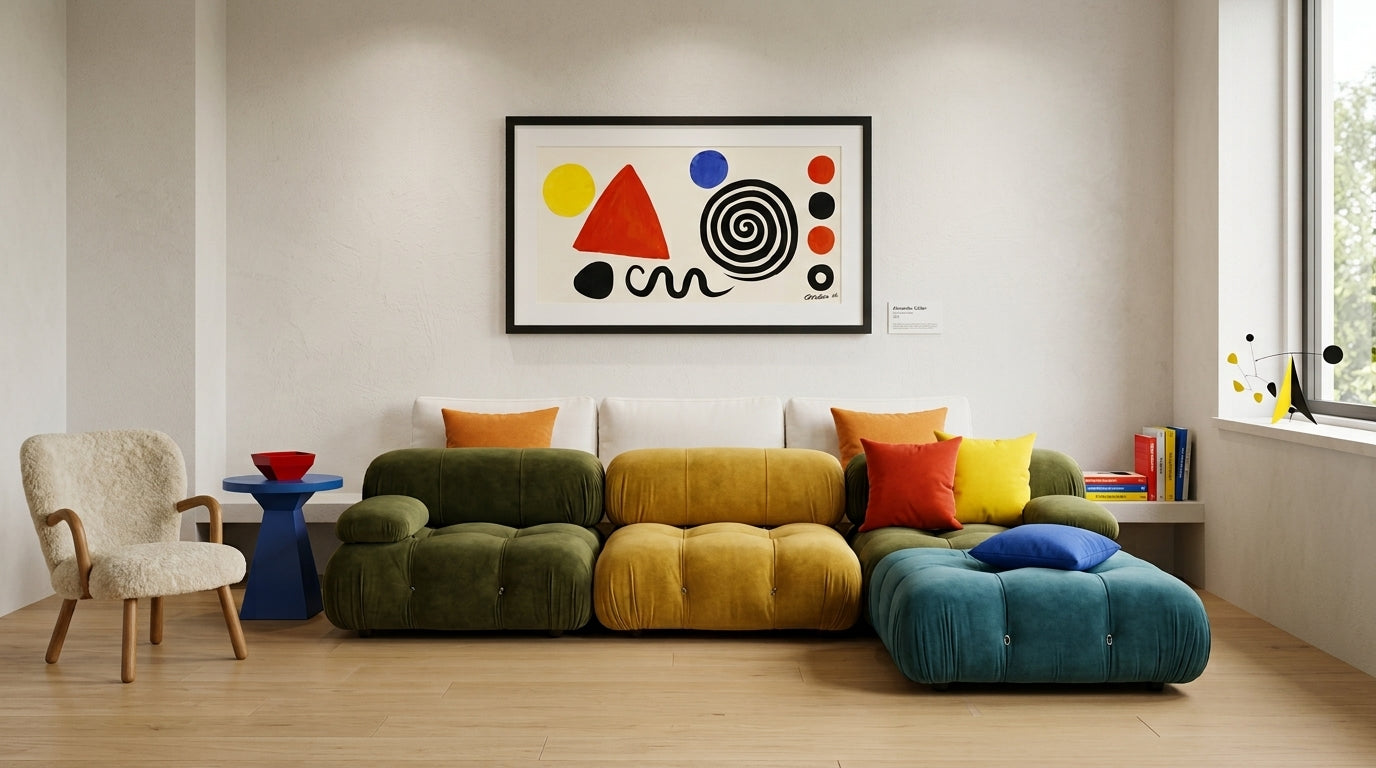

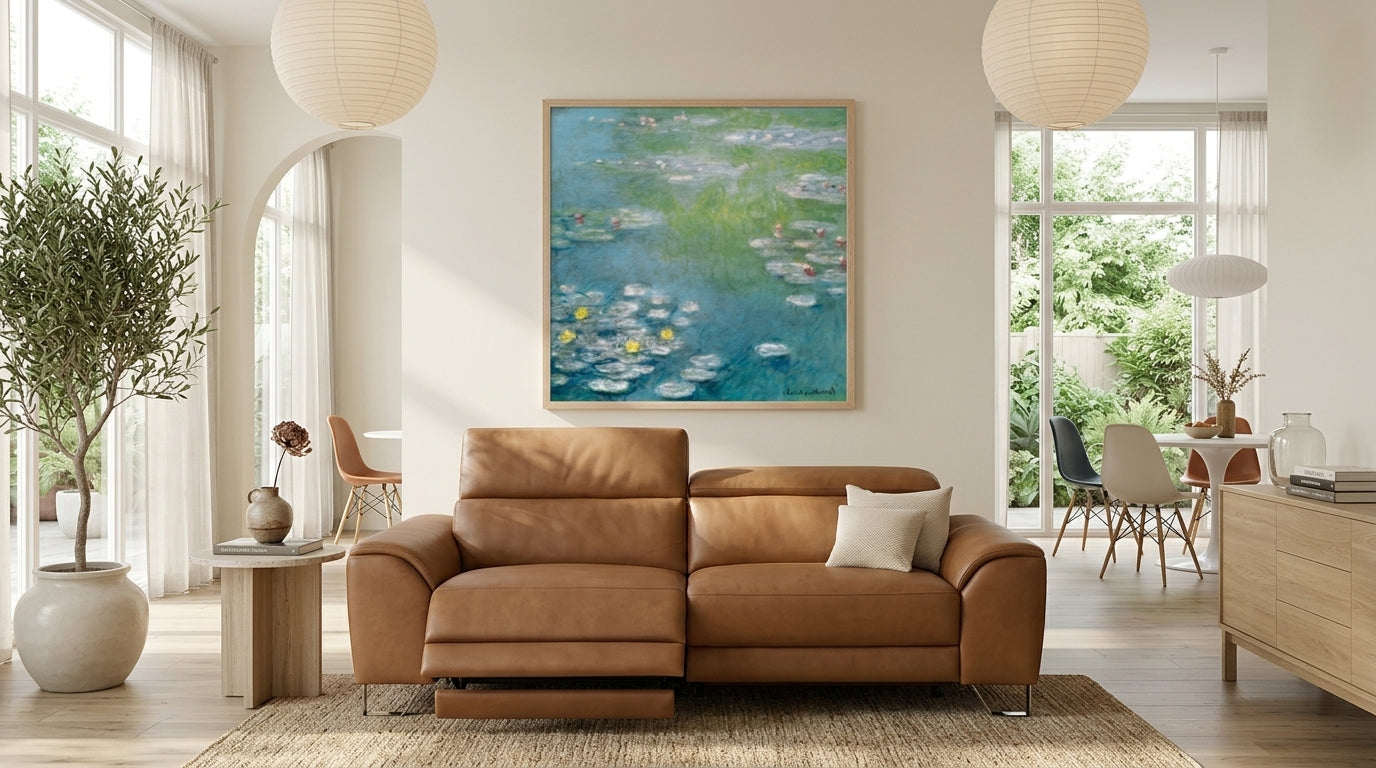

The best wall art does more than fit an empty space. It gives the living room personality while supporting the furniture, colours and proportions already in the room.
Choosing artwork becomes easier when you stop asking, “Which artwork looks good by itself?” and start asking, “What should this artwork do for my living room?”

Decide What the Room Needs
Begin by looking at the atmosphere of your existing interior.
A room with neutral upholstery, pale walls and simple furniture may benefit from:
- a colourful abstract artwork;
- a bold graphic print; or
- a landscape with a strong focal colour.
A living room with patterned fabrics, sculptural furniture or multiple decorative objects may benefit from quieter art with fewer colours and more open visual space.
Art can either reinforce the room’s character or provide a deliberate contrast.
Consider the Sofa First
The sofa is usually the largest visual object in the living room. The artwork above or near it should feel proportionate to its width and visual weight.
A compact sofa may suit one medium-sized artwork. A long sectional can support:
- one large horizontal piece;
- a pair of coordinated prints; or
- a carefully spaced group of artworks.
Avoid choosing a small artwork merely because the wall is technically large enough to hold it. A piece that is too small can appear disconnected from the furniture beneath it.
Work with Colour, Not Exact Matching
Your artwork does not need to contain the precise shade of your sofa.
A better approach is to find a visual relationship through:
- complementary colours;
- repeated undertones;
- similar warmth or coolness;
- contrasting accent colours; or
- related natural tones.
A walnut table may connect beautifully with an artwork containing rust, amber or deep green. A grey sofa may be brought to life by yellow, blue, red or botanical tones.
The objective is coordination, not perfect matching.
Choose a Subject You Can Live With
Trends can be useful for inspiration, but art occupies a prominent place in the home. Select something you will still enjoy after the current interior trend has passed.
Consider whether you are drawn to:
- landscapes and nature;
- figurative art;
- botanical subjects;
- geometric abstraction;
- expressive colour;
- photography; or
- graphic Pop Art.
Your response to the artwork is more important than whether it follows a prescribed decorating style.
Think About the View from Different Positions
Artwork should not only look correct when standing directly in front of it.
Consider how it appears:
- from the entrance;
- while sitting on the sofa;
- from the dining area;
- along an adjoining corridor; and
- under daytime and evening lighting.
In open-plan Singapore homes, a living-room artwork may be visible from several areas. It should therefore contribute to the wider interior, not only the wall where it is hung.
Let One Element Lead
Not every item in the room should demand equal attention.
When the artwork is visually bold, allow the sofa and accessories to remain more restrained. When the furniture is sculptural or colourful, select art that gives it space.
A successful interior often has one leading statement, supported by several quieter elements.